Within Affiliate Engines
Why Thin Reviews Fail Affiliate Buyers
Strong review pages explain who a product suits, where it falls short, and what buyers should check before clicking.
On this page
- Specific product fit and buyer reassurance
- Limitations, alternatives, and pricing checks
- Avoiding copied merchant claims

Page outline Jump by section
Introduction
Thin affiliate reviews fail because they ask the reader to trust a sales page in disguise. A useful review page does the opposite: it helps a buyer decide whether one specific product, service, or platform is right for their situation, explains where it falls short, and gives them checks to make before clicking through. That matters commercially because review traffic is often late-stage traffic. The reader may already know the product name and only need reassurance before buying, trialling, subscribing, or ruling it out.
For affiliate websites, the trust problem is also the revenue problem. A review that simply repeats merchant claims may get clicks in the short term, but it gives the reader little reason to believe the publisher, return to the site, follow internal links, or trust other recommendations. Search guidance, advertising rules, and consumer research all point in the same direction: review pages need clear disclosure, genuine evaluation, evidence of use or research, and balanced treatment of limitations. Google’s review guidance explicitly encourages first-hand supporting evidence, explanation of why a product is best for a given purpose, and links to multiple sellers where useful.[Google for Developers]developers.google.comfor Developers How To Write Reviews | Google Search Central | DocumentationGoogle for DevelopersHow To Write Reviews | Google Search Central | Documentation…
Why thin reviews lose the moment the reader hesitates
A review page usually receives a more sceptical visitor than a broad buying guide. Someone searching for a product review is not just asking “What is this?” They are asking “Can I trust this product, this price, this provider, and this recommendation?” A thin review answers with recycled features: fast, lightweight, premium, easy to use, best value. A trustworthy review answers with fit, trade-offs, proof, and next steps.
The weakness of a thin affiliate review is that it collapses three different jobs into one shallow recommendation. It tries to describe the product, persuade the buyer, and monetise the click without doing enough evaluation. That is risky because buyers now expect to cross-check claims across merchant pages, marketplaces, social proof, independent reviewers, and user comments. BrightLocal’s 2025 consumer review research found that trust in online reviews has weakened compared with earlier years, with far fewer consumers saying they trust reviews as much as personal recommendations. The useful lesson for affiliate review pages is not “reviews no longer matter”, but that readers are more cautious and need more specific evidence before trusting a recommendation.[BrightLocal]brightlocal.comlocal consumer review survey 2025Local Consumer Review Survey 2025January 29, 2025 — 29 Jan 2025 — In fact, while our 2020 report found that 79% of consumers t…
This is especially important for software-generated affiliate sites, because scale can easily produce pages that look complete but feel interchangeable. If every review uses the same vague praise, the same merchant screenshots, the same pros and cons, and the same call-to-action, the system is not building review assets; it is producing comparison-shaped advertorial. At scale, the better pattern is to make each review answer product-specific buyer doubts:
- Who is this product genuinely suitable for?
- Who should avoid it?
- Which claim needs checking before purchase?[powerreviews.com]powerreviews.comPower Reviews The Complete Guide to Ratings & ReviewsPower Reviews The Complete Guide to Ratings & Reviews
- What alternative should the reader consider?
- What price, plan, model, warranty, stock, or renewal term could change the decision?
- What evidence supports the verdict beyond the merchant’s own copy?
A strong review page does not need to be hostile. It needs to be discriminating. A reader can accept an affiliate link when the review helps them avoid a poor fit as well as find a good one.
Product fit is the trust signal buyers notice first
The most useful review pages define fit before they push a link. “Best for everyone” is rarely believable. “Best for renters who need a compact cordless vacuum for hard floors” is more useful because it ties the recommendation to a real buying context. Fit-based reviewing turns a product page from a sales summary into a decision filter.
This matters for conversion because affiliate review pages often sit near the bottom of the funnel. The reader may already be comparing one product against a shortlist. A review that clearly names the right buyer can increase confidence without needing exaggerated claims. For example, a review of a website builder should separate “good for a quick brochure site” from “good for a complex content site with affiliate templates, comparison tables, and long-term SEO needs”. A review of a mattress should separate side sleepers, heavier sleepers, hot sleepers, return-policy-sensitive buyers, and people replacing a specific firmness level. The commercial value comes from better-matched clicks, not just more clicks.
Google’s guidance on high-quality reviews reinforces this kind of specificity. It asks reviewers to explain what makes something different from competitors, discuss benefits and drawbacks based on original research, describe key decision factors, and include evidence such as visuals, audio, links, or other proof of experience where appropriate.[Google for Developers]developers.google.comfor Developers How To Write Reviews | Google Search Central | DocumentationGoogle for DevelopersHow To Write Reviews | Google Search Central | Documentation… For an affiliate site, those prompts translate into repeatable page elements:
- Fit summary: who should consider the product and who should not.
- Use-case verdicts: how the product performs for common buyer scenarios.
- Decision factors: the few criteria that actually change the purchase decision.
- Evidence block: testing notes, source comparisons, user-review patterns, screenshots, measurements, or documented feature checks.
- Alternative path: a nearby product, service, or category page for readers who are not a fit.
The important point is that “fit” should not be a decorative paragraph near the end. It should shape the whole review. If a product is excellent for beginners but weak for advanced users, the introduction, verdict, pros and cons, pricing section, internal links, and call-to-action should all reflect that split.
Buyer reassurance should reduce doubt, not hide it
Good review pages reassure buyers by naming the main doubts they already have. They do not pretend that no doubts exist. In many categories, the reassurance a reader needs is not “this product is good”; it is “this product is good despite the thing I am worried about”.
For affiliate reviews, common buyer doubts include setup difficulty, reliability, returns, warranty cover, renewal pricing, hidden fees, compatibility, durability, customer support, data privacy, shipping delays, cancellation friction, and whether a cheaper alternative would be enough. The right doubts depend on the category. A review of email marketing software should check list-size pricing, automation limits, deliverability claims, trial restrictions, and migration friction. A review of a coffee machine should check cleaning, capsule costs, counter space, descaling, noise, repairability, and whether the buyer can easily get compatible pods.
A trustworthy review page turns those doubts into visible sections. That helps the reader and also helps the website-generation system classify page intent. A review page for a high-risk or high-cost product should carry more reassurance content than a low-cost accessory review. A subscription product needs pricing and cancellation checks. A health, finance, or safety-adjacent product needs stronger claim discipline. A fast-moving tech product needs freshness checks, model version checks, and alternatives.
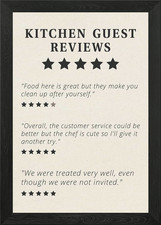
Consumer behaviour research supports the value of this balanced approach. PowerReviews reports that shoppers actively seek out negative reviews because they help them judge whether a product fits their needs.[PowerReviews]powerreviews.comPower Reviews The Complete Guide to Ratings & ReviewsPower Reviews The Complete Guide to Ratings & Reviews Baymard’s ecommerce research similarly shows that users often weigh the number of reviews as well as the rating average, because a high score with very few reviews can feel less reliable.[Baymard Institute]baymard.comInstitute Always Show the Number of User Ratings in List ItemsInstitute Always Show the Number of User Ratings in List Items Affiliate review pages can use this insight without copying marketplace review systems: they should summarise recurring buyer complaints, distinguish serious flaws from taste-based complaints, and explain what kind of buyer is most affected.
A practical reassurance block might say: the main complaint is not performance but setup time; the refund policy is generous but excludes opened consumables; the cheaper plan removes one feature most small teams need; the product has excellent ratings but the review base is still small; or the merchant’s headline price applies only to annual billing. These details may reduce raw click-through rate from poorly matched readers, but they can improve trust, merchant conversion, and repeat visits.
Limitations make the recommendation more believable
A review without limitations reads like a merchant page. That is a problem because affiliate pages are commercially conflicted by design: the publisher may earn money if the reader clicks and buys. The way to handle that conflict is not to hide it, but to make the editorial judgement visible.
Disclosure is part of this. In the UK, the Advertising Standards Authority’s CAP guidance says affiliate marketing is performance-based marketing where the affiliate is rewarded for attracting customers, usually through clicks or sales, and content containing affiliate links may need to be identified as advertising depending on the arrangement.[ASA]asa.org.ukaffiliate marketingaffiliate marketing The ASA has also warned that affiliate-linked content may need either the whole content or relevant parts clearly identified as advertising.[ASA]asa.org.ukget yourself affiliated with the rules on affiliate marketingget yourself affiliated with the rules on affiliate marketing In the US, the Federal Trade Commission’s endorsement guidance likewise stresses clear disclosure of material connections, and Amazon Associates requires legally compliant disclosure alongside identification as an Amazon Associate.[Federal Trade Commission]WikipediaFederal Trade Commission
But disclosure alone is not enough. A page can be disclosed and still be thin. The more persuasive trust signal is editorial restraint: saying when the product is not the right choice. That should include both functional limitations and commercial limitations.
Functional limitations are the product’s real weaknesses: a tool lacks advanced reporting, a laptop has poor battery life under load, a course is too basic for experienced users, a hosting plan has weak staging support, or a kitchen appliance is awkward to clean. Commercial limitations are the buying conditions that change the deal: price jumps after year one, key features sit behind a higher plan, stock varies by region, returns are conditional, or a discount applies only to bundles.
For scalable affiliate sites, this suggests a simple rule: every review template should require at least one limitation that affects a real buyer segment. “No product is perfect” is filler. “Not ideal for teams that need role-based permissions because that feature is only on the higher plan” is useful. The limitation should be specific enough to route the reader to an alternative page or offer.
Alternatives prevent the page from becoming a dead end
A review that concludes “buy this” or “do not buy this” wastes part of the reader journey. Many visitors are not binary buyers. They are “maybe, but what else?” buyers. A strong affiliate review therefore includes alternatives that are chosen for decision reasons, not just commission availability.
Alternatives are most useful when they answer a clear contrast:
- Cheaper but less capable: for buyers who like the product but not the price.
- More advanced: for buyers who will outgrow the reviewed option.
- Simpler: for buyers overwhelmed by features.
- Better for a specific use case: for readers whose situation does not match the product’s strengths.
- Different commercial model: one-off purchase instead of subscription, monthly plan instead of annual commitment, marketplace seller instead of direct merchant.
Google’s review guidance says reviewers should consider links to multiple sellers so readers can buy from their preferred merchant.[Google for Developers]developers.google.comfor Developers How To Write Reviews | Google Search Central | DocumentationGoogle for DevelopersHow To Write Reviews | Google Search Central | Documentation… The same principle can be extended to internal linking: if a reader is not right for the reviewed product, the page should offer the next-best page, not lose them. This is where review pages become part of a revenue system rather than isolated articles.
For example, a review of a budget web host might link to “best hosting for high-traffic affiliate sites”, “cheap WordPress hosting alternatives”, and “managed hosting for non-technical beginners”. Those links are not generic SEO decoration. They preserve buyer momentum while moving the reader to a page that may better match intent. The review page becomes a fork in the conversion path: buy this, compare alternatives, or step up to a different category.
This also protects long-term trust. If a product is not right for the reader and the page says so, the site still helps them. That makes the next recommendation more credible.
Pricing checks are where many affiliate reviews become outdated
Pricing is one of the easiest places for review pages to lose trust. Affiliate sites often quote launch discounts, merchant headline prices, or old plan structures that no longer match the buying page. Even when the review is honest, stale pricing makes the whole page feel neglected.
Price is not just a number. It can include plan tiers, renewal rates, add-ons, shipping, returns, VAT, financing, contract length, trial restrictions, usage limits, and whether the product is sold by several merchants. For services and software, renewal pricing and feature gating are often more important than the first-month price. For physical products, stock, condition, warranty, delivery, and seller reputation can matter as much as the discount.
A review page that builds trust should therefore treat pricing as a check, not a claim to freeze forever. Phrases such as “check current price”, “pricing changes by plan”, and “look at renewal terms before buying” are more durable than hard-coded prices in fast-moving categories. Where exact prices are used, the page should show when they were checked and whether they refer to monthly billing, annual billing, a bundle, or a limited promotion.
This is also an important monetisation decision. A review page can send the reader to the merchant too early, before they understand the true cost, or too late, after burying the buying path under unnecessary detail. The better pattern is to place price checks near the verdict and again near the call-to-action:
- The opening verdict should say whether the product is good value at its usual price, only during discounts, or only for a specific plan.
- The pricing section should explain what changes the value judgement.
- The call-to-action should remind the reader what to verify on the merchant page before purchasing.
That structure supports revenue per visitor because it helps the reader click with fewer unresolved objections.
Copied merchant claims are the main thin-review failure mode
The fastest way to produce a review page is to summarise the merchant’s feature list. It is also the fastest way to produce a page that adds little value. Merchant copy is designed to present the product in its best light. A review should interrogate that copy.
The danger is larger now because generative writing tools make it easy to produce fluent but unsupported reviews. Research on AI-generated product reviews has found that humans can struggle to distinguish machine-generated fake reviews from real ones, with overall accuracy close to chance in one set of studies.[arXiv]arxiv.orgSource details in endnotes. That does not mean all AI-assisted content is fake, but it does raise the standard for evidence. A review page that sounds polished but contains no product-specific proof will increasingly look suspicious to both readers and platforms.
Avoiding copied merchant claims means changing the source of the review’s authority. Instead of “the merchant says”, the page should show “we checked”, “buyers commonly report”, “the policy states”, “the plan comparison shows”, “the product differs from its predecessor in these ways”, or “this feature matters only if you need this use case”. Google’s guidance on people-first content asks creators to avoid producing content primarily to manipulate rankings and to evaluate whether content gives readers a satisfying experience.[Google for Developers]developers.google.comfor Developers How To Write Reviews | Google Search Central | DocumentationGoogle for DevelopersHow To Write Reviews | Google Search Central | Documentation… For review pages, satisfaction comes from independent judgement.
A useful anti-copying framework is claim, check, consequence:
- Claim: What does the merchant promise?
- Check: What evidence can the review page use to verify, qualify, or challenge it?
- Consequence: What does that mean for a buyer?
For example, if a merchant claims “unlimited projects”, the review should check whether storage, users, exports, automations, or support are actually limited. If a product claims “easy setup”, the review should explain what setup involves and who may still struggle. If a course claims “beginner-friendly”, the review should say what prior knowledge is assumed. If a hosting company claims “fast performance”, the review should explain whether that is based on published benchmarks, hands-on testing, third-party data, or only marketing language.
This pattern is scalable because it can be built into review templates across categories. The exact evidence changes, but the logic stays repeatable.
What trustworthy review evidence looks like
Not every affiliate site can run a laboratory, buy every product, or conduct long-term testing. But every credible review page needs some form of evidence that goes beyond the merchant page. The key is to match the evidence level to the decision risk.
Low-risk products may only need clear feature comparison, user-review synthesis, price checks, and merchant-policy checks. Expensive, technical, medical, financial, safety-related, or long-term products need stronger evidence, specialist input, hands-on testing, or more cautious claims. Review publishers with strong testing reputations make this visible. RTINGS says it buys, tests, and reviews products itself, publishes detailed test results, and uses objective, repeatable scoring systems.[RTINGS.com]rtings.comYou Might Start Seeing Ads On RTINGS.comYou Might Start Seeing Ads On RTINGS.com Which? states that its research, testing, and recommendations are independent and not influenced by affiliate schemes.[Which?]which.co.ukWhich?Which? affiliate activityWhich?Which? affiliate activity
Most affiliate sites will sit somewhere below that level of testing, but they can still be honest about their evidence. A review page should not imply hands-on testing if none occurred. A reader may accept a desk-researched review if it is transparent, careful, and useful. They are less likely to forgive a fake first-hand tone.
Evidence types that scale well include:
- Policy checks: return period, warranty, cancellation rules, free trial terms, renewal pricing, shipping restrictions.
- Specification checks: dimensions, compatibility, plan limits, integrations, materials, battery capacity, weight, supported countries.
- Review-pattern synthesis: recurring complaints and praise across credible user-review sources, with attention to review volume and recency.
- Version checks: model year, plan changes, discontinued features, replaced products, updated pricing.
- Merchant comparison: whether the product is cheaper, better supported, or more available from one seller than another.
- First-hand evidence where possible: photos, screenshots, test notes, setup steps, measured results, long-term-use updates.
The page should distinguish these evidence types clearly. “We tested” is different from “we analysed user reviews” and both are different from “the merchant states”. Blurring those categories may make the copy smoother, but it weakens trust.
Review pages need a stricter template than informational articles
A standard informational article can answer a question and move on. A review page has to support a commercial decision. That means it needs a stronger template, but not a mechanical one. The template should enforce trust elements while allowing the content to reflect the product’s real decision points.
A strong review page structure might include:[theguardian.com]theguardian.comSource details in endnotes.
- Plain verdict: who should buy, who should avoid, and the main reason.
- Affiliate disclosure near the buying path: clear enough that the reader understands the commercial relationship before clicking.
- Product fit: the buyer types, use cases, or budgets where the product makes sense.
- What stands out: strengths that are specific, evidenced, and commercially relevant.
- What falls short: limitations that affect real buyer choices.
- Pricing and plan checks: current-price caveats, renewal risks, tier differences, or seller comparison.
- Alternatives: not random competitors, but alternatives tied to buyer needs.
- Final click guidance: what to verify on the merchant page before buying.
This is not just a writing preference. It affects monetisation logic. The verdict and fit sections shape click quality. The limitation section protects credibility. The pricing section reduces post-click surprise. The alternatives section captures readers who would otherwise leave. The final click guidance creates a more confident outbound click.
For high-volume website production, the template should also support page classification. A single-product review for “Product X review” should not be treated the same as a “Product X vs Product Y” comparison or a “Best product for use case” buying guide. Review pages are about reassurance for one named product. Comparisons are about trade-offs between named options. Buying guides are about category selection. Mixing those intents can make the page feel unfocused.
Trust also depends on what the page refuses to do
The most trustworthy review pages have boundaries. They do not rank products they cannot meaningfully evaluate. They do not invent testing. They do not present temporary discounts as permanent value. They do not hide the fact that an affiliate link may earn commission. They do not treat merchant claims as verified facts. They do not recommend the highest-paying product when a lower-paying option is a better fit.
Those refusals matter because the review ecosystem is under more scrutiny. In the UK, the CMA’s 2025 fake reviews guidance explains that the Digital Markets, Competition and Consumers Act 2024 introduced a banned practice covering fake reviews, concealed incentivised reviews, and misleading review information.[GOV.UK]GOV.UKfake reviews cma208fake reviews cma208 The CMA has also opened investigations into major companies over possible failings involving fake or misleading reviews, including concerns such as suppression of negative reviews, inflated star ratings, and incentivised positive reviews.[The Guardian]theguardian.comSource details in endnotes.
Affiliate publishers are not usually running marketplace review systems, but the broader trust issue affects them. Readers are learning to ask whether reviews are genuine, whether incentives are hidden, and whether negative information has been filtered out. A review page that openly discusses drawbacks, alternatives, and pricing caveats is better aligned with that sceptical reader than one that tries to look unanimously positive.
For a website-generation system, this creates an important quality rule: trust signals should be mandatory, not optional decoration. A review page without a limitation, disclosure, alternative, evidence note, or price check should be treated as incomplete. That does not guarantee revenue, but it reduces the risk of scaling pages that look monetised before they look useful.
The commercial value of buyer trust
Buyer trust is not a soft virtue separate from affiliate revenue. It changes the economics of the page. A trusted review can attract stronger clicks, lower bounce-back behaviour, improve internal navigation, and support repeat visits across a topic cluster. A thin review may monetise one page view if the reader was already determined to buy, but it does little to build a site-wide asset.
The revenue path is clearest when review pages sit inside a cluster. A reader might enter through a single-product review, move to a comparison, check a buying guide, then return to a merchant link. Another reader might decide the reviewed product is wrong and choose an alternative from the same site. In both cases, the review earns its place by preserving decision momentum.
A practical review-page quality test is simple: after reading the page, could a buyer explain why the product is or is not right for them? If the answer is no, the page has not built trust. If the answer is yes, the page has done more than carry an affiliate link. It has turned commercial traffic into a guided decision, which is the real function of review content in an affiliate website system.
Amazon book picks
Further Reading
Books and field guides related to Why Thin Reviews Fail Affiliate Buyers. Use these as the next step if you want deeper reading beyond the article.
They Ask, You Answer
Product reviews work better when they answer real buyer objections, pricing concerns, and comparisons.
Everybody Writes
Helps affiliate reviewers write original, useful evaluations instead of copied merchant claims.
Trust Me, I'm Lying
Highlights why readers distrust manipulative online media and thin promotional content.
Made to Stick
Useful for explaining product fit, drawbacks, and recommendations clearly and credibly.
eBay marketplace picks
Marketplace Samples
Example marketplace items related to this page. Use the search link to explore similar finds on eBay.





Endnotes
1.
Source: developers.google.com
Title: for Developers How To Write Reviews | Google Search Central | Documentation
Link:https://developers.google.com/search/docs/specialty/ecommerce/write-high-quality-reviews
Source snippet
Google for DevelopersHow To Write Reviews | Google Search Central | Documentation...
2.
Source: brightlocal.com
Title: local consumer review survey 2025
Link:https://www.brightlocal.com/research/local-consumer-review-survey-2025/
Source snippet
Local Consumer Review Survey 2025January 29, 2025 — 29 Jan 2025 — In fact, while our 2020 report found that 79% of consumers t...
Published: January 29, 2025
3.
Source: powerreviews.com
Title: Power Reviews The Complete Guide to Ratings & Reviews
Link:https://www.powerreviews.com/the-complete-guide-to-ratings-reviews/
4.
Source: baymard.com
Title: Institute Always Show the Number of User Ratings in List Items
Link:https://baymard.com/blog/user-perception-of-product-ratings
5.
Source: asa.org.uk
Title: affiliate marketing
Link:https://www.asa.org.uk/advice-online/affiliate-marketing.html
6.
Source: asa.org.uk
Title: get yourself affiliated with the rules on affiliate marketing
Link:https://www.asa.org.uk/news/get-yourself-affiliated-with-the-rules-on-affiliate-marketing.html
7.
Source: affiliate-program.amazon.com
Link:https://affiliate-program.amazon.com/help/node/topic/GHQNZAU6669EZS98
8.
Source: arxiv.org
Link:https://arxiv.org/abs/2506.13313
9.
Source: developers.google.com
Link:https://developers.google.com/search/docs/fundamentals/creating-helpful-content
10.
Source: rtings.com
Title: You Might Start Seeing Ads On RTINGS.com
Link:https://www.rtings.com/company/learn/monetization-and-ads
11.
Source: rtings.com
Title: test benches and scoring system
Link:https://www.rtings.com/company/test-benches-and-scoring-system
12.
Source: assets.publishing.service.gov.uk
Link:https://assets.publishing.service.gov.uk/media/67eeb64fe9c76fa33048c790/CMA208_-_Fake_reviews_guidance.pdf
13.
Source: GOV.UK
Title: fake reviews cma208
Link:https://www.gov.uk/government/publications/fake-reviews-cma208
14.
Source: support.google.com
Title: affiliate disclosure information
Link:https://support.google.com/webmasters/thread/157311520/affiliate-disclosure-information?hl=en
15.
Source: developers.google.com
Title: qualify outbound links
Link:https://developers.google.com/search/docs/crawling-indexing/qualify-outbound-links
16.
Source: support.google.com
Link:https://support.google.com/merchants/answer/6098512?hl=en-GB
17.
Source: support.google.com
Title: i had a real review removed for “ fake content that isn’t a genuine experience”
Link:https://support.google.com/maps/thread/419150782/i-had-a-real-review-removed-for-%E2%80%9C-fake-content-that-isn%E2%80%99t-a-genuine-experience%E2%80%9D?hl=en
18.
Source: powerreviews.com
Title: power of reviews 2023
Link:https://www.powerreviews.com/power-of-reviews-2023/
19.
Source: GOV.UK
Title: online consumer reviews
Link:https://www.gov.uk/cma-cases/online-consumer-reviews
20.
Source: GOV.UK
Title: social media endorsements being transparent with your followers
Link:https://www.gov.uk/government/publications/social-media-endorsements-guidance-for-content-creators/social-media-endorsements-being-transparent-with-your-followers
21.
Source: GOV.UK
Link:https://www.gov.uk/cma-cases/online-reviews-and-endorsements
22.
Source: rtings.com
Link:https://www.rtings.com/company/how-we-make-money
23.
Source: rtings.com
Title: how we test
Link:https://www.rtings.com/tv/learn/how-we-test
24.
Source: rtings.com
Link:https://www.rtings.com/company/about-us
25.
Source: baymard.com
Title: respond to negative user reviews
Link:https://baymard.com/blog/respond-to-negative-user-reviews
26.
Source: baymard.com
Link:https://baymard.com/
27.
Source: baymard.com
Title: current state ecommerce product page ux
Link:https://baymard.com/blog/current-state-ecommerce-product-page-ux
28.
Source: baymard.com
Title: user reviews dtc
Link:https://baymard.com/blog/user-reviews-dtc
29.
Source: baymard.com
Title: allow reviewers to upload images
Link:https://baymard.com/blog/allow-reviewers-to-upload-images
30.
Source: baymard.com
Title: sort by customer ratings
Link:https://baymard.com/blog/sort-by-customer-ratings
31.
Source: brightlocal.com
Title: the state of reviews 2025
Link:https://www.brightlocal.com/webinars/the-state-of-reviews-2025/
32.
Source: brightlocal.com
Title: local consumer review survey
Link:https://www.brightlocal.com/research/local-consumer-review-survey/
33.
Source: brightlocal.com
Link:https://www.brightlocal.com/research/
34.
Source: brightlocal.com
Title: local seo statistics
Link:https://www.brightlocal.com/resources/local-seo-statistics/
35.
Source: affiliate-program.amazon.com
Link:https://affiliate-program.amazon.com/help/operating/agreement
36.
Source: affiliate-program.amazon.in
Link:https://affiliate-program.amazon.in/help/operating/agreement
37.
Source: ftc.gov
Title: s endorsement guides what people are asking
Link:https://www.ftc.gov/business-guidance/resources/ftcs-endorsement-guides-what-people-are-asking
38.
Source: which.co.uk
Title: Which?Which? affiliate activity
Link:https://www.which.co.uk/help/which-affiliate-activity-aPA408A93lxh
39.
Source: theguardian.com
Link:https://www.theguardian.com/business/2026/mar/27/five-firms-including-autotrader-and-just-eat-investigated-over-fake-review-failings
40.
Source: ftc.gov
Link:https://www.ftc.gov/
41.
Source: facebook.com
Link:https://www.facebook.com/back2gaming/posts/rtingscom-just-announced-they-are-locking-their-full-lab-test-results-and-in-dep/1485976186217770/
42.
Source: Wikipedia
Title: Federal Trade Commission
Link:https://en.wikipedia.org/wiki/Federal_Trade_Commission
43.
Source: linkedin.com
Link:https://www.linkedin.com/posts/bright-local-seo_local-consumer-review-survey-2025-activity-7290417175922638849-l_s-
44.
Source: linkedin.com
Link:https://www.linkedin.com/posts/baymard-institute_product-page-ux-2025-15-pitfalls-and-best-activity-7285002885770182656-N_YX
45.
Source: linkedin.com
Link:https://www.linkedin.com/posts/powerreviews_the-complete-guide-to-ratings-reviews-activity-7378846352128204800–m3h
46.
Source: usa.gov
Link:https://www.usa.gov/agencies/federal-trade-commission
47.
Source: regulatoryoversight.com
Title: Federal Trade Commission Settled With Shutterstock for $35 Million
Link:https://www.regulatoryoversight.com/2026/05/federal-trade-commission-settled-with-shutterstock-for-35-million/
Additional References
48.
Source: youtube.com
Link:https://www.youtube.com/watch?v=HKVQdlHM_Mo
Source snippet
Writing compelling product reviews and recommendations...
49.
Source: youtube.com
Title: How To Optimise Your Website For Leads and Conversions (Beginner Friendly)
Link:https://www.youtube.com/watch?v=bJ2S9n6_1Mw
Source snippet
How To Build An Affiliate Marketing Website With WordPress...
50.
Source: youtube.com
Title: How To Build An Affiliate Marketing Website With Word Press
Link:https://www.youtube.com/watch?v=STfhVuk3uts
Source snippet
Google Discover's New Rules, March Core Update Fallout & AI Content Penalty Risks...
51.
Source: youtube.com
Title: Writing compelling product reviews and recommendations
Link:https://www.youtube.com/watch?v=miwkVcpZ2_g
Source snippet
How To Optimise Your Website For Leads and Conversions (Beginner Friendly)...
52.
Source: ftc.gov
Link:https://www.ftc.gov/business-guidance/advertising-marketing/endorsements-influencers-reviews
53.
Source: ftc.gov
Link:https://www.ftc.gov/system/files/ftc_gov/pdf/p204500_endorsement_guides_in_2023.pdf
54.
Source: researchgate.net
Link:https://www.researchgate.net/publication/380508657_The_Impact_of_Online_Reviews_on_Consumers%27_Purchase_Intentions_Examining_the_Social_Influence_of_Online_Reviews_Group_Similarity_and_Self-Construal
55.
Source: researchgate.net
Link:https://www.researchgate.net/publication/387949709_Evaluating_the_influence_of_customer_reviews_and_consumer_trust_on_online_purchase_behavior
56.
Source: linkedin.com
Link:https://www.linkedin.com/posts/gearoidbuckley_92-of-consumers-trust-peer-recommendations-activity-7416532059055128576-0y_v
57.
Source: thetoy.org
Link:https://thetoy.org/disclosure/
Topic Tree
Follow this branch
Parent topic
Affiliate EnginesRelated pages 8
- Best Lists What Makes a Best Of Page Convert?
- Comparisons Why A Versus B Pages Drive Clicks
- Intent Topics Which Affiliate Topics Are Worth Building?
- Offer Fit Are High Commissions Always Better?
- Revenue Model Why Equal Traffic Does Not Mean Equal Earnings
- Support Pages Can Informational Pages Still Earn Revenue?
- Trust Rules How Affiliate Sites Keep Reader Trust
- User Journeys How Internal Links Create Affiliate Paths