Within Affiliate Engines
Can Informational Pages Still Earn Revenue?
Useful support pages answer early questions and guide readers towards commercial pages when the next decision becomes clear.
On this page
- Earlier stage questions with later stage value
- Internal links from guides to buying pages
- When not to force affiliate links
Page outline Jump by section
Introduction
Yes, informational pages can still earn revenue, but usually not by behaving like product roundups in disguise. Their job is to answer earlier-stage questions, build trust, and move readers towards a buying page only when the next decision is genuinely clearer. In an affiliate website system, these support pages are not “filler” around the money pages. They are the pages that catch people before they know what to buy, explain the problem in terms they can use, and create a sensible route into comparisons, reviews, calculators, checklists, or buying guides.
That matters because affiliate marketing is paid on performance, not on attention alone: a publisher earns when referred visitors generate sales, leads, clicks, or other tracked actions under the programme’s rules. UK advertising guidance describes affiliate marketing as a performance-based arrangement where the affiliate is rewarded for customers attracted through their marketing, usually measured through clicks or sales.[ASA]asa.org.ukaffiliate marketingOnline Affiliate Marketing22 Mar 2023 — Affiliate marketing is a type of performance-based marketing where an affiliate is rewarded by… The practical challenge is therefore not just producing traffic, but designing pages that help the right readers take the next useful step.
Earlier-stage questions with later-stage value
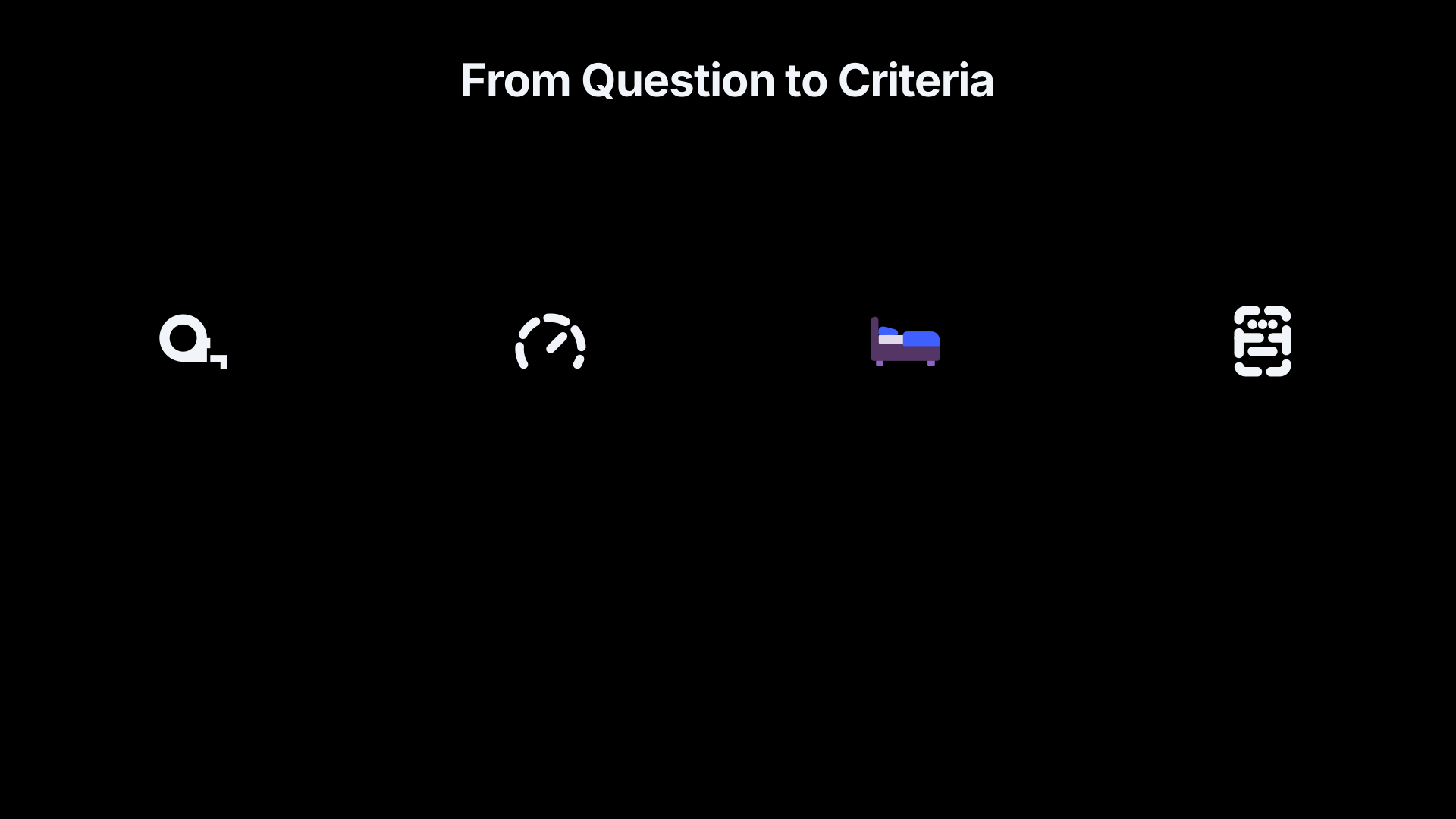
An informational page is valuable when it answers a question that often appears before a commercial decision. A visitor searching “what size dehumidifier do I need?” may not yet be ready for a “best dehumidifiers” page. But the answer can reveal the buying criteria: room size, moisture level, running cost, noise, tank capacity, drainage options and budget. Once the reader understands those factors, a link to “best dehumidifiers for a damp bedroom” becomes helpful rather than forced.
This fits how people actually make buying decisions online. Google’s “messy middle” research describes the space between a purchase trigger and a final decision as a loop between exploration and evaluation, where shoppers gather information, compare options, narrow choices, and sometimes loop back again before buying.[Google Business]business.google.comAs people explore and evaluate in the messy middle, cognitive biases shape their shopping behavior and…Read more… Informational pages work best inside that loop. They help with exploration, then hand the reader to an evaluation page when the question naturally changes from “what does this mean?” to “which option should I choose?”
For affiliate sites, the strongest support pages are usually not broad encyclopaedia entries. They are pages that expose a choice. Useful patterns include:
- Definition pages with a buying consequence: “What is a dual-fuel towel rail?” should explain the term, then show when it matters compared with electric-only or central-heating-only models.
- Problem diagnosis pages: “Why is my mattress making my back hurt?” can separate likely causes, then link to mattress firmness guides, pillow guides, or replacement signs.
- Sizing and compatibility pages: “What wattage air fryer do I need?” can lead into product lists by household size.
- Feature explanation pages: “Is brushless worth it on a cordless drill?” can link to best cordless drills for DIY, trade use, or budget buyers.
- Decision-tool pages: “Should I buy a condenser or heat pump tumble dryer?” can naturally point to comparison and product recommendation pages.
The common feature is that the informational answer changes the reader’s next step. A page about “history of tumble dryers” might attract curiosity, but it has weak buying-path value unless the site has a reason to connect that history to present-day product decisions. A page about “heat pump vs condenser dryer running costs” has much stronger commercial potential because the reader is already weighing trade-offs that affect a purchase.
The support page should earn the click before asking for it
A support page fails when it asks for an affiliate click before it has earned the reader’s trust. This is especially common on pages that answer a simple question and then immediately push a product table. If the reader came for a definition, a troubleshooting step, or a decision framework, a premature product block can feel like a detour.
The better mechanism is to match the link to the reader’s current level of certainty. Nielsen Norman Group’s work on information scent explains that users choose links based on cues that suggest what they will find next; vague or mismatched links make people less likely to continue.[Nielsen Norman Group]nngroup.cominformation scentinformation scent For affiliate pages, that means the internal link should name the next decision clearly. “See our full guide to the best quiet dehumidifiers for bedrooms” has stronger scent than “recommended products” because it tells the reader exactly why the next page is relevant.
A good informational page therefore works like a bridge:
- It recognises the reader’s current question. The page should answer the query directly before introducing commercial choices.
- It turns the answer into criteria. The reader should leave with a clearer sense of what matters: size, material, safety rating, compatibility, running cost, use case, or warranty.
- It offers a next page only where the criteria point to a choice. The next click should feel like the continuation of the answer, not an advert placed in the middle of it.
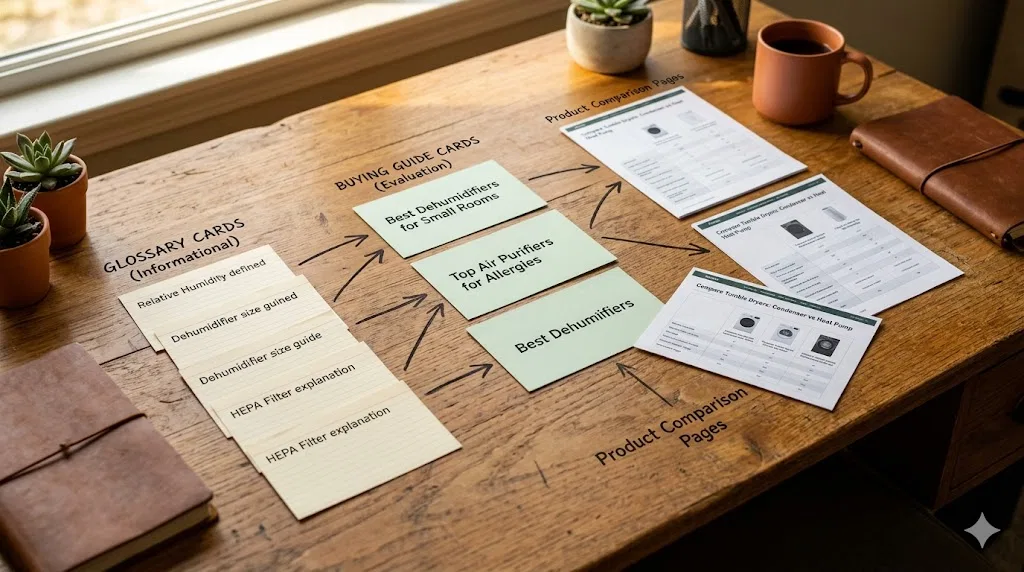
For example, a page on “what is a HEPA filter?” should not simply list air purifiers with affiliate buttons. It should explain what HEPA means, what it does not mean, when filtration grade matters, and which other factors affect performance. Only then does it make sense to offer links such as “best air purifiers for allergies”, “air purifier CADR explained”, or “HEPA vs carbon filters”.
Internal links from guides to buying pages
Internal linking is where informational pages become part of a revenue system rather than a loose collection of articles. Search tools and SEO platforms often describe internal links as a way to help users and search engines understand site structure, find related pages and move through a site.[Ahrefs]ahrefs.comInternal Links for SEO: An Actionable GuideInternal Links for SEO: An Actionable Guide For affiliate websites, their commercial role is more specific: they move readers from question-answering pages into pages where affiliate offers are more appropriate.
The important design choice is not simply “add more links”. It is deciding which buying page each informational page should feed. A scalable system can classify support pages by the decision they unlock:
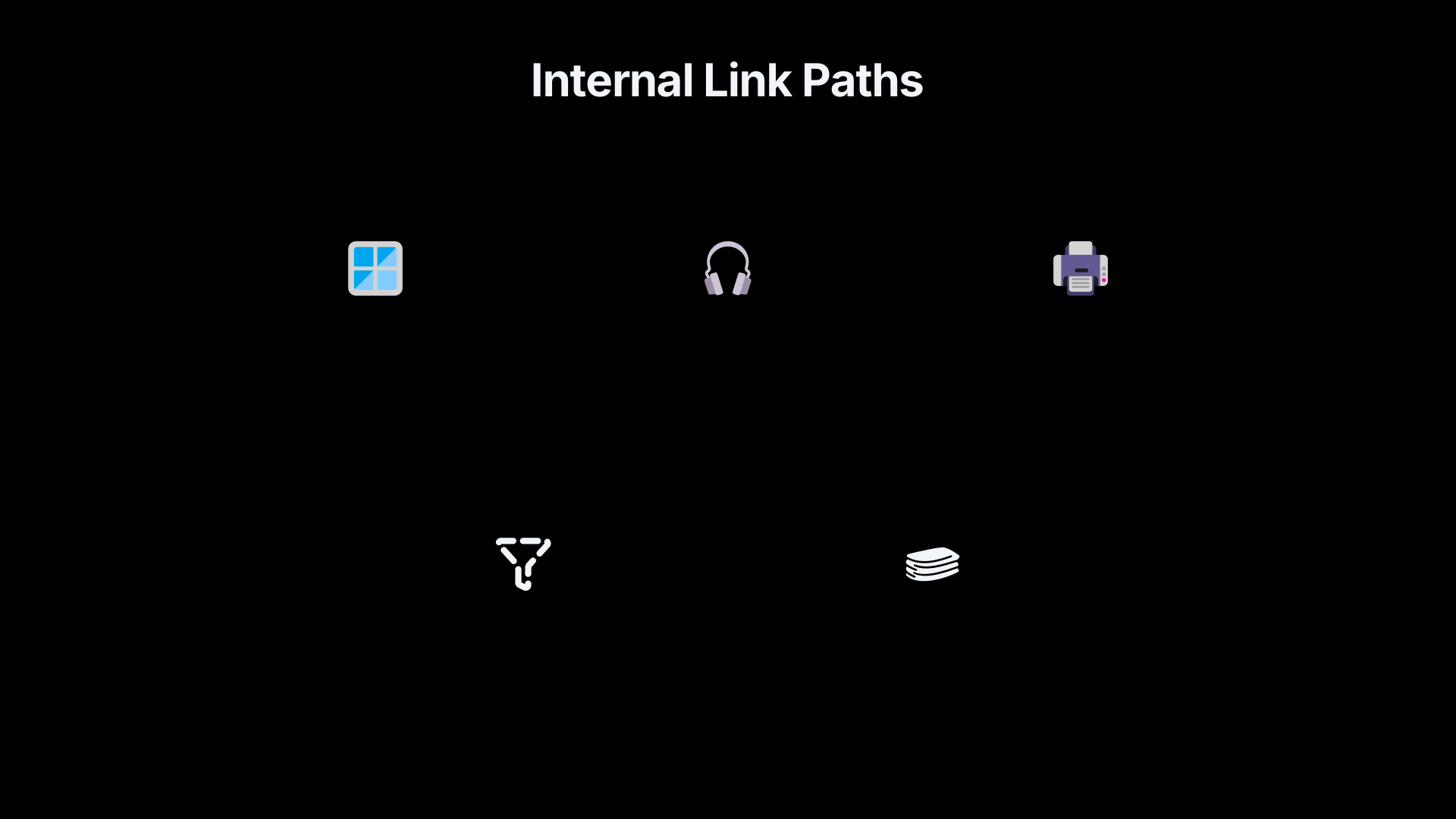
- Problem pages should link to solution-category pages.
Example: “How to stop condensation on windows” can link to dehumidifiers, window vacs, extractor fans, insulation guides, or hygrometers depending on the diagnosis.
- Feature pages should link to comparison or “best for” pages.
Example: “Are noise-cancelling headphones worth it?” can link to “best noise-cancelling headphones for commuting” or “ANC vs passive isolation”.
- Compatibility pages should link to filtered buying guides.
Example: “Which printer ink does my Canon printer use?” can link to cartridge guides, subscription ink comparisons, or compatible replacement pages.
- Maintenance pages should link to consumables, accessories, or replacement-decision pages.
Example: “How often should you replace a Brita filter?” can link to filter cartridge packs, jug comparisons, or alternatives.
- Terminology pages should link to beginner-friendly buying guides.
Example: “What does tog mean in duvets?” can link to “best duvets by season” or “summer vs winter duvet guide”.
This structure also avoids overloading every support page with the same generic money-page links. A page about “how long do cordless drill batteries last?” should not link to every drill article on the site. It should link to the pages most directly shaped by that issue: drill battery comparisons, spare battery availability, best cordless drills for heavy use, or buying a drill kit versus a bare tool.
The best affiliate links on support pages are often indirect
Informational pages can contain affiliate links, but the best revenue path is often indirect. A reader who asks “can I use an electric blanket with a memory foam mattress?” may need safety guidance and product limitations before any recommendation is appropriate. A direct affiliate link to a blanket may be less useful than a link to a carefully structured buying guide about safe electric blankets, mattress compatibility, and automatic shut-off features.
This is where page type matters. Google’s guidance for high-quality reviews says review content should provide useful evidence, comparisons and information that helps readers make decisions, and it notes that reviews often use affiliate links.[Google for Developers]developers.google.comSource details in endnotes. But an informational page is not always a review page. If the page has not assessed products, compared alternatives, or explained why one option fits better than another, it should not pretend to be making a recommendation.
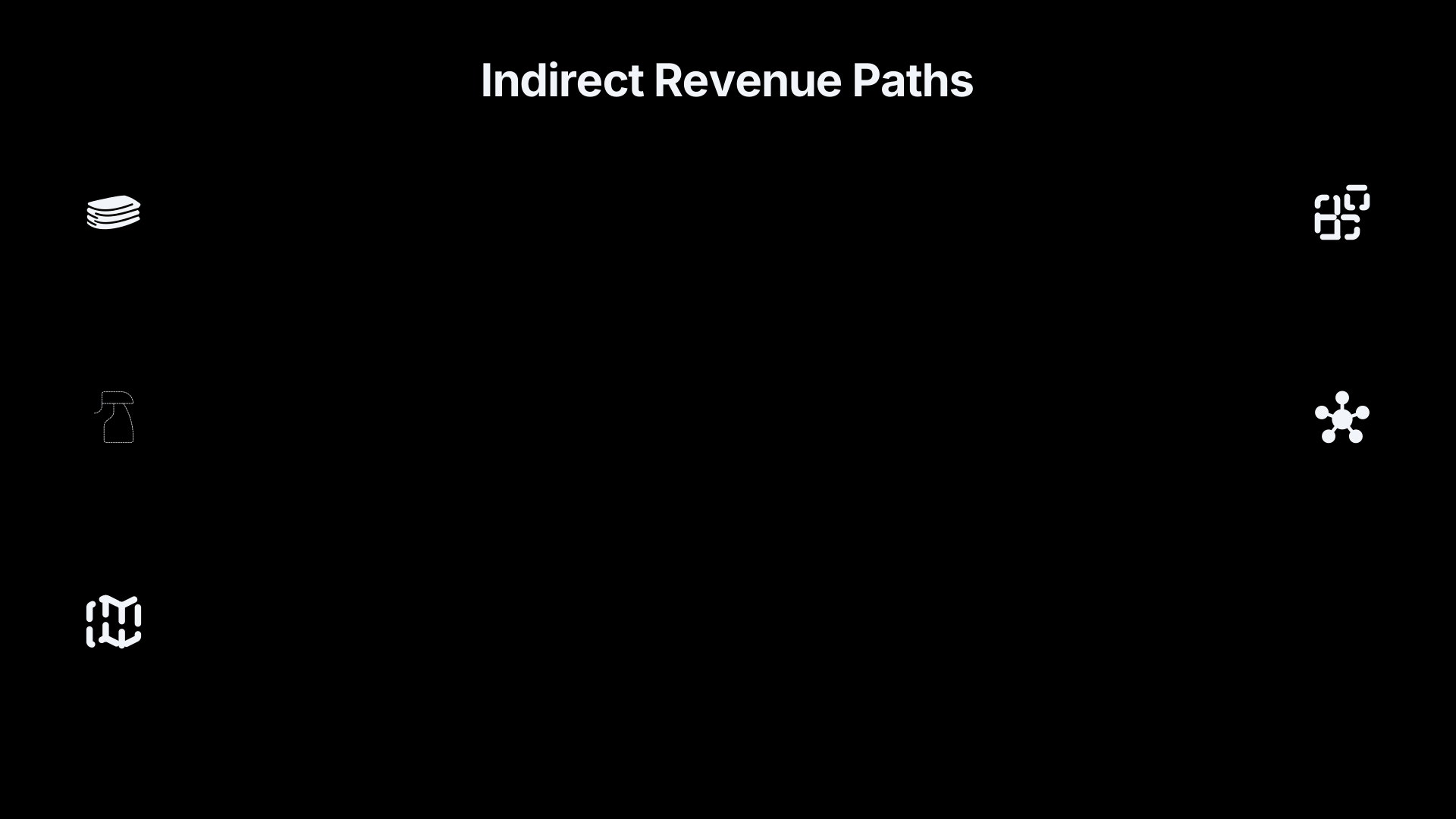
A support page can still create revenue opportunities through:
- Contextual links to commercial guides: “Once you know the room size, compare our guide to the best dehumidifiers for flats.”
- Decision blocks: “Choose a portable AC if you need cooling; choose a dehumidifier if the main issue is damp.”
- Related product categories: A cleaning-method page can link to sprays, cloths, brushes, replacement parts, or protective treatments.
- Email or retargeting paths where appropriate: In some niches, a checklist or calculator may be more suitable than pushing an immediate affiliate offer.
- Internal hub links: A broad guide can pass readers into several narrower buying paths without choosing one too early.
The key is to treat monetisation as a sequence. First, answer the question. Then identify the decision that follows. Then link to the page that best handles that decision. The affiliate click should usually happen on the page where the reader has enough information to compare options.
When not to force affiliate links
Some informational pages should not contain prominent affiliate links at all. This is not a missed opportunity; it is often the difference between a trustworthy support page and a thin affiliate page. Google has long warned that affiliate sites need to provide significant added value rather than simply syndicating or repackaging content available elsewhere.[Google for Developers]developers.google.comSource details in endnotes. If a page is only loosely related to a product, adding affiliate links can weaken the page’s purpose and make the site look less useful.
There are several cases where forcing links is usually a mistake.
The query has no clear commercial next step.
A reader searching “what is relative humidity?” may be early in the learning process. A hygrometer or dehumidifier link could be relevant later, but the page should first explain the concept, healthy indoor ranges, and how humidity affects comfort, mould and materials.
The reader needs safety, legal, medical or financial caution before product choice.
Some topics require care because a product recommendation may be inappropriate without context. In these areas, support pages should avoid overstating benefits, making unverified claims, or using affiliate incentives to push a decision before the reader understands the risks.
The page is a reference page, not a decision page.
Glossaries, technical definitions, “what does this symbol mean?” pages and simple compatibility lookups may support the site’s authority and internal navigation without needing visible product boxes.
The commercial offer is weak or mismatched.
If there is no reputable merchant, poor stock, low-quality products, low commission, or a bad fit between the reader’s problem and available offers, the page should not be monetised aggressively. A weak offer can reduce trust and may send readers away from better internal paths.
The link would interrupt the answer.
Some pages need a complete explanation before the buying path appears. Interrupting a troubleshooting process with product buttons can make the article feel less helpful, especially if the reader has not yet confirmed that buying something is the right solution.
This restraint is also a compliance issue. UK advertising guidance says affiliate marketing content must be obviously identifiable as advertising where required, and that the nature of the content and the affiliate arrangement affect whether all or part of the content needs to be labelled.[ASA]asa.org.ukget yourself affiliated with the rules on affiliate marketingget yourself affiliated with the rules on affiliate marketing Amazon UK’s Associates guidance also says affiliates must include a legally compliant disclosure with affiliate links and identify themselves as Associates.[Amazon Associates]affiliate-program.amazon.co.ukAmazon Associates Amazon.co.uk Associates CentralAmazon Associates Amazon.co.uk Associates Central A support page that hides commercial intent inside neutral-looking advice risks both user distrust and regulatory problems.
How to decide which support pages are worth creating
Not every informational keyword deserves a page. In a high-volume website system, support pages should be prioritised by their ability to feed useful commercial paths, not just by search volume. The right question is: “What buying decision does this page make easier?”
A practical scoring model can use five checks:
- Decision proximity: Does the query sit near a purchase decision, replacement decision, comparison, repair decision or compatibility question?
- Criteria creation: Will the answer produce criteria that can be reused on commercial pages?
- Internal-link fit: Is there a clear buying guide, review, comparison, calculator or category page that this article can feed?
- Offer relevance: Are there reputable affiliate offers that genuinely solve the problem once the reader is ready?
- Template repeatability: Can the pattern be reused across adjacent topics without producing thin or repetitive pages?
For example, “what is the best thread count for sheets?” is stronger than “history of cotton bedding” for an affiliate bedding site because it turns into a buying criterion. It can feed pages about best cotton sheets, percale vs sateen sheets, cooling bedding, hotel-style bedding, and budget sheet sets. “What is an SDS drill?” is strong for a DIY tools site because it helps beginners distinguish between ordinary hammer drills and heavier masonry tools before comparing products.
This is also where informational pages help with cluster expansion. A successful support pattern in one category can be adapted across related categories: “what size X do I need?”, “X vs Y”, “is X worth it?”, “how long does X last?”, “can X be repaired?”, “when should I replace X?” and “what features matter for X?” The page template can be standardised, but the answer must still be specific to the product category. Standardisation should improve consistency, not create generic filler.
Matching page format to the reader’s uncertainty
The best support page format depends on what the reader is uncertain about. A definition query needs a different structure from a troubleshooting query, and both differ from a compatibility question. Treating every informational page as a blog post wastes commercial potential because it hides the buying path inside prose.
Useful formats include:
Explainer plus next-step guide.
Best for questions such as “what is induction hob boost mode?” or “what does SPF mean in moisturiser?” The page should define the term, explain when it matters, correct common misunderstandings, and link to buying pages shaped by that feature.
Decision tree.
Best for “do I need X or Y?” questions. A decision tree can guide the reader from symptoms or use cases into the right category page. For instance, “portable air conditioner or dehumidifier?” can split readers by heat, humidity, room type, noise tolerance and running cost.
Calculator or sizing table.
Best for size, capacity, wattage, tog rating, lumen output, storage size, battery runtime or coverage area. These pages often feed high-converting “best for room size” or “best for household size” guides.
Troubleshooting path.
Best for repair-versus-replace decisions. A page on “washing machine smells musty” can separate cleaning steps from cases where the reader may need cleaning tablets, replacement seals, drain hoses or a new appliance.
Comparison explainer.
Best for confusing alternatives such as “ceramic vs tourmaline hair straighteners”, “mesh Wi-Fi vs extender”, or “cordless vs corded vacuum”. The page should avoid declaring a universal winner and instead map each option to use cases.
Baymard’s ecommerce UX research repeatedly highlights that product finding depends on users being able to navigate, search, filter and evaluate products effectively; its benchmarks show many ecommerce sites still perform poorly on product list and search UX.[Baymard Institute]linkedin.comBaymard Institute Affiliate support pages can reduce that burden before the reader reaches the merchant by clarifying the category, narrowing the choice set, and explaining the filters that matter.
What to measure on support pages
A support page should not be judged only by affiliate clicks. If the page is earlier in the journey, its job may be to move readers deeper into the site, not to convert immediately. The right measurements depend on the intended step.
Useful metrics include:
- Scroll depth and answer engagement: Did readers reach the section where the decision becomes clear?
- Internal click-through rate: Did they click from the support page to the intended buying guide, comparison, review or calculator?
- Assisted revenue: Did sessions that began on support pages later generate affiliate clicks or conversions?
- Path quality: Which support-page links lead to engaged buying-page visits rather than quick exits?
- Query refinement: Do readers move from broad informational pages into narrower “best for”, “vs”, “review” or “where to buy” pages?
- Template performance: Do certain support-page patterns reliably feed higher-value commercial pages across categories?
This is where informational pages become useful to a website generation system. A system can learn that “X vs Y” pages may feed comparison pages well, while “what is X?” pages may work better as hub-entry pages. It can learn that sizing pages often produce strong buying-guide clicks, while history or trivia pages may attract traffic without commercial movement. The point is not to eliminate all low-converting pages, but to know what role each page type is supposed to play.
The trust problem with informational affiliate content
Informational affiliate pages have a built-in tension: readers arrive for help, while the publisher may earn from recommendations. That tension is manageable when the page is transparent, useful and properly linked. It becomes a problem when neutral-sounding advice is shaped mainly around commission.
Disclosure matters because affiliate content can otherwise look like ordinary editorial content. The US Federal Trade Commission’s endorsement guidance answers common questions for bloggers, advertisers and creators, while UK ASA guidance requires affiliate marketing to be identifiable where the commercial relationship affects the content.[Federal Trade Commission]ftc.govs endorsement guides what people are askings endorsement guides what people are asking Research on affiliate disclosures on YouTube and Pinterest found low disclosure rates and found that users often failed to understand short, non-explanatory disclosures, showing why clear wording is more useful than vague labels.[arXiv]arxiv.orgSource details in endnotes.
For public-facing affiliate websites, this creates a simple rule: disclosure should not be treated as a footer technicality. If a support page includes affiliate links, the reader should understand that the site may earn a commission and still be able to see why the recommendation or internal link is relevant. Clear disclosure and useful page design support each other. A page that explains its commercial relationship plainly and then gives careful, specific guidance is more credible than one that hides affiliate intent behind vague “recommended” buttons.
A practical support-page model
A strong informational page that feeds buying paths can follow a repeatable model without feeling formulaic:
- Answer the query directly.
Start by resolving the reader’s immediate uncertainty in plain language.
- Explain why the answer affects buying.
Connect the information to product type, feature choice, size, compatibility, safety, running cost or suitability.
- Separate cases.
Show when different readers should make different choices. This prevents forced one-size-fits-all recommendations.
- Introduce the next decision.
Use a clear bridge such as “Once you know the room size, the next choice is capacity and noise level.”
- Link to the right commercial page.
Send readers to the most specific buying guide, comparison, review or tool, not a generic category page unless that is genuinely the best next step.
- Avoid over-monetising the page.
Use affiliate links only where the page has enough context to support them. Otherwise, use internal links to pages designed for product selection.
- Measure the path, not just the page.
A support page may be successful because it improves commercial-page conversion, even if it does not generate many direct affiliate clicks itself.
This model keeps informational pages in their proper role. They are not diluted product pages, and they are not traffic pages with no revenue purpose. They are guided entry points into a decision system.
Why support pages are worth scaling
Informational support pages are worth scaling because they create more routes into buying decisions. They catch readers who are not ready for a product roundup, help them understand the criteria, and then send them towards pages where affiliate links are more relevant. Done well, they improve user flow, strengthen topical coverage, and increase the number of commercially useful journeys through the site.
The pattern is especially valuable in complex categories where readers do not know the right product type at the start. Home appliances, DIY tools, software, fitness equipment, baby products, pet care, personal finance tools and outdoor gear all contain early questions that shape later purchases. A site that only publishes “best X” pages competes at the most crowded point of the journey. A site with strong support pages can meet the reader earlier, earn trust, and guide the decision before the final comparison begins.
The central rule is simple: an informational page earns revenue by making the next commercial decision easier. It should not force affiliate links into every answer. It should create a clear, useful path from “I need to understand this” to “I now know what kind of product, comparison, or guide I should look at next.”
Amazon book picks
Further Reading
Books and field guides related to Can Informational Pages Still Earn Revenue?. Use these as the next step if you want deeper reading beyond the article.
They Ask, You Answer
Directly supports creating informational pages that answer buyer questions and lead naturally to revenue pages.
Everybody Writes
Helps turn support pages into genuinely useful content rather than disguised product pitches.
Building a StoryBrand 2.0
Informational pages need to connect reader problems to the next useful commercial step.
Content Inc.: How Entrepreneurs Use Content to Build Massive...
Explains how useful content can build an audience before monetisation.
eBay marketplace picks
Marketplace Samples
Example marketplace items related to this page. Use the search link to explore similar finds on eBay.







Endnotes
1.
Source: asa.org.uk
Title: affiliate marketing
Link:https://www.asa.org.uk/advice-online/affiliate-marketing.html
Source snippet
Online Affiliate Marketing22 Mar 2023 — Affiliate marketing is a type of performance-based marketing where an affiliate is rewarded by...
2.
Source: business.google.com
Link:https://business.google.com/uk/think/consumer-insights/navigating-purchase-behavior-and-decision-making/
Source snippet
As people explore and evaluate in the messy middle, cognitive biases shape their shopping behavior and...Read more...
3.
Source: ahrefs.com
Title: Internal Links for SEO: An Actionable Guide
Link:https://ahrefs.com/blog/internal-links-for-seo/
4.
Source: developers.google.com
Link:https://developers.google.com/search/docs/specialty/ecommerce/write-high-quality-reviews
5.
Source: developers.google.com
Title: affiliate programs and added value
Link:https://developers.google.com/search/blog/2014/01/affiliate-programs-and-added-value
6.
Source: asa.org.uk
Title: get yourself affiliated with the rules on affiliate marketing
Link:https://www.asa.org.uk/news/get-yourself-affiliated-with-the-rules-on-affiliate-marketing.html
7.
Source: baymard.com
Title: current state product list and filtering
Link:https://baymard.com/blog/current-state-product-list-and-filtering
8.
Source: baymard.com
Title: ecommerce search query types
Link:https://baymard.com/blog/ecommerce-search-query-types
9.
Source: arxiv.org
Link:https://arxiv.org/abs/1809.00620
10.
Source: baymard.com
Link:https://baymard.com/
11.
Source: baymard.com
Link:https://baymard.com/research/ecommerce-product-lists
12.
Source: baymard.com
Link:https://baymard.com/research/ecommerce-search
13.
Source: baymard.com
Link:https://baymard.com/research/homepage-and-category-usability
14.
Source: baymard.com
Title: current state ecommerce product page ux
Link:https://baymard.com/blog/current-state-ecommerce-product-page-ux
15.
Source: baymard.com
Title: desktop ux ecommerce
Link:https://baymard.com/blog/desktop-ux-ecommerce
16.
Source: baymard.com
Link:https://baymard.com/blog
17.
Source: baymard.com
Title: have filters for list item info
Link:https://baymard.com/blog/have-filters-for-list-item-info
18.
Source: baymard.com
Title: apparel search
Link:https://baymard.com/blog/apparel-search
19.
Source: developers.google.com
Title: creating helpful content
Link:https://developers.google.com/search/docs/fundamentals/creating-helpful-content
20.
Source: support.google.com
Link:https://support.google.com/webmasters/thread/302446608/provide-details-about-the-affiliate-products-review-guidelines-and-can-we-used-more-than-ads-network?hl=en
21.
Source: support.google.com
Title: low traffic affiliate site what can i do better
Link:https://support.google.com/webmasters/thread/112211009/low-traffic-affiliate-site-what-can-i-do-better?hl=en
22.
Source: developers.google.com
Title: qualify outbound links
Link:https://developers.google.com/search/docs/crawling-indexing/qualify-outbound-links
23.
Source: support.google.com
Title: sponsored links rel attribute
Link:https://support.google.com/webmasters/thread/118842020/sponsored-links-rel-attribute?hl=en
24.
Source: developers.google.com
Title: helpful content update
Link:https://developers.google.com/search/blog/2022/08/helpful-content-update
25.
Source: developers.google.com
Title: search and ai content
Link:https://developers.google.com/search/blog/2023/02/google-search-and-ai-content
26.
Source: support.google.com
Title: thin or pure affiliate blog
Link:https://support.google.com/webmasters/thread/20577817/thin-or-pure-affiliate-blog?hl=en
27.
Source: workspace.google.com
Title: affiliate program
Link:https://workspace.google.com/intl/en_uk/affiliate-program/
28.
Source: business.google.com
Title: messy middle 2023
Link:https://business.google.com/en-all/think/consumer-insights/messy-middle-2023/
29.
Source: affiliate-program.amazon.com
Link:https://affiliate-program.amazon.com/help/operating/agreement
30.
Source: ahrefs.com
Link:https://ahrefs.com/academy/affiliate-marketing-course/lesson
31.
Source: ahrefs.com
Link:https://ahrefs.com/seo/link-building
32.
Source: ahrefs.com
Title: prioritize internal linking
Link:https://ahrefs.com/blog/prioritize-internal-linking/
33.
Source: ahrefs.com
Title: affiliate marketing tools
Link:https://ahrefs.com/blog/affiliate-marketing-tools/
34.
Source: ahrefs.com
Title: create affiliate marketing website
Link:https://ahrefs.com/blog/create-affiliate-marketing-website/
35.
Source: youtube.com
Link:https://www.youtube.com/watch?v=-c9AUhXAFD8
36.
Source: youtube.com
Link:https://www.youtube.com/watch?v=khLXlseXffs
37.
Source: youtube.com
Link:https://www.youtube.com/watch?v=Z0RkLSgwQS4
38.
Source: youtube.com
Link:https://www.youtube.com/watch?v=5tmRy4G7HfA
39.
Source: youtube.com
Link:https://www.youtube.com/watch?v=_xGmA7SeoqA
40.
Source: youtube.com
Link:https://www.youtube.com/watch?v=G9UqlJ9LFKs
41.
Source: youtube.com
Link:https://www.youtube.com/watch?v=DSOfPEyeMNg
42.
Source: keyword.com
Title: affiliate links seo rankings
Link:https://keyword.com/blog/affiliate-links-seo-rankings/
43.
Source: nature.com
Link:https://www.nature.com/nature-index/topics/l4/consumer-information-search-behavior-and-decision-making
44.
Source: youtube.com
Title: How to Build a Marketing Funnel that Actually Works for your Business
Link:http://www.youtube.com/watch?v=_2H7OlHkv1w
Source snippet
The Marketing Funnel Explained: What Is It & How To Write One...
45.
Source: youtube.com
Title: The Marketing Funnel Explained: What Is It & How To Write One
Link:http://www.youtube.com/watch?v=Xx75loJvFhg
Source snippet
Topical Authority Map Tutorial (Step‑by‑Step) for 2025...
46.
Source: youtube.com
Link:http://www.youtube.com/watch?v=JA4KnGvfXAo
Source snippet
Aligning Your Content Marketing Strategy With the Customer Journey...
47.
Source: youtube.com
Title: Aligning Your Content Marketing Strategy With the Customer Journey
Link:http://www.youtube.com/watch?v=8todAcg84Nw
Source snippet
How to do SEO when your website is new...
48.
Source: youtube.com
Title: How to do SEO when your website is new
Link:http://www.youtube.com/watch?v=XKWYFN6DbdY
Source snippet
Affiliate marketing informational content funnel buying journey website strategy How to Build a Marketing Funnel that Actually Works for...
49.
Source: thinkwithgoogle.com
Link:https://www.thinkwithgoogle.com/_qs/documents/9998/Decoding_Decisions_The_Messy_Middle_of_Purchase_Behavior.pdf
Source snippet
Google BusinessDecoding DecisionsIn our model, between the twin poles of trigger and purchase, sits the messy middle, in which consumers...
50.
Source: nngroup.com
Title: information scent
Link:https://www.nngroup.com/articles/information-scent/
51.
Source: nngroup.com
Title: information foraging
Link:https://www.nngroup.com/articles/information-foraging/
52.
Source: databox.com
Title: Ahrefs Internal Links
Link:https://databox.com/metric-library/metrics/ahrefs/internal-links
53.
Source: affiliate-program.amazon.co.uk
Title: Amazon Associates Amazon.co.uk Associates Central
Link:https://affiliate-program.amazon.co.uk/help/node/topic/GPXFHVYZMTGPUMPE
54.
Source: ftc.gov
Title: s endorsement guides what people are asking
Link:https://www.ftc.gov/business-guidance/resources/ftcs-endorsement-guides-what-people-are-asking
55.
Source: linkedin.com
Title: Baymard Institute
Link:https://www.linkedin.com/posts/baymard-institute_ux-ecommerce-uxr-activity-7382369333504659457-SKP-
56.
Source: linkedin.com
Link:https://www.linkedin.com/posts/baymard-institute_product-list-ux-best-practices-2025-baymard-activity-7371921940611231744-8YD1
57.
Source: linkedin.com
Link:https://www.linkedin.com/posts/baymard-institute_the-4-sorting-options-every-e-commerce-site-activity-7318304746816036866-OKxi
58.
Source: neveralwaysbook.com
Title: messy middle
Link:https://neveralwaysbook.com/learn/messy-middle
59.
Source: geniuslink.com
Title: amazon associates requirements
Link:https://geniuslink.com/blog/amazon-associates-requirements/
60.
Source: digitallytop.com
Title: ahrefs internal links opportunities a complete beginners guide
Link:https://digitallytop.com/digital-marketing/ahrefs-internal-links-opportunities-a-complete-beginners-guide/
61.
Source: uxtigers.com
Title: information scent
Link:https://www.uxtigers.com/post/information-scent
62.
Source: Wikipedia
Title: Affiliate marketing
Link:https://en.wikipedia.org/wiki/Affiliate_marketing
Additional References
63.
Source: ftc.gov
Link:https://www.ftc.gov/business-guidance/advertising-marketing/endorsements-influencers-reviews
64.
Source: iab.com
Link:https://www.iab.com/wp-content/uploads/2016/11/IAB-Affiliate-Marketing-Handbook_2016.pdf
65.
Source: britexotics.co.uk
Link:https://britexotics.co.uk/affiliate-disclosure
66.
Source: bigcommerce.co.uk
Link:https://www.bigcommerce.co.uk/articles/ecommerce/affiliate-marketing/
67.
Source: innovationvisual.com
Link:https://www.innovationvisual.com/knowledge-hub/knowledge/mapping-content-for-different-stages-of-buyer-journey
68.
Source: geniuslink.com
Link:https://geniuslink.com/blog/amazon-affiliate-disclosure-guide/
69.
Source: iubenda.com
Link:https://www.iubenda.com/en/blog/amazon-affiliate-disclosure-example/
70.
Source: wpvip.com
Link:https://wpvip.com/resource/content-marketing-funnel-guide/
71.
Source: nngroup.com
Link:https://www.nngroup.com/videos/better-link-labels/
72.
Source: taylorfrancis.com
Link:https://www.taylorfrancis.com/chapters/edit/10.4324/9780203047613-14/consumer-decision-making-prepurchase-information-search
Topic Tree
Follow this branch
Parent topic
Affiliate EnginesRelated pages 8
- Best Lists What Makes a Best Of Page Convert?
- Comparisons Why A Versus B Pages Drive Clicks
- Intent Topics Which Affiliate Topics Are Worth Building?
- Offer Fit Are High Commissions Always Better?
- Revenue Model Why Equal Traffic Does Not Mean Equal Earnings
- Reviews Why Thin Reviews Fail Affiliate Buyers
- Trust Rules How Affiliate Sites Keep Reader Trust
- User Journeys How Internal Links Create Affiliate Paths